 Physics at Virginia
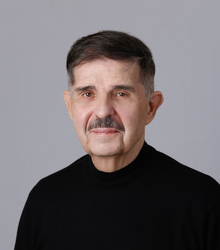
Brad Cox
Ph.D., 1967, Duke
Professor Emeritus
Experimental High Energy Physics
Research Interests
Click on the website icon above to go to
https://en.wikipedia.org/wiki/Brad_Cox_(physicist)
or go to Inspire Bradley B. Cox - Inspire HEP
for a more extensive and complete summary of Cox's work.
Professor Cox has been involved in many experiments at Brookhaven National Laboratory, Stanford Linear Accelerator Center, Fermi National Accelerator Laboratory and CERN Lab in Geneva, Switzerland, studying electroweak interactions, quantum chromodynamics, heavy flavor production, and time reversal violation in the kaon system. Prof. Cox has acted as scientific spokesman for several of these experiments. He was a professor at Johns Hopkins University and Fermi National Accelerator Laboratory before joining the University of Virginia faculty to found the experimental particle physics group. He held several positions at Fermilab including head of the Proton Laboratory and the Research Services Department and was deputy chair of the Physics Department. During his tenure as Proton Lab head, the b quark was discovered in the Proton Lab.
Professor Cox is a Fellow of the American Physical Society, a Distinguished Scientist of the University of Virginia, and wasnamed the Outstandng Scientist of the year in Virginia in 2014. He has also received the 2014 Jesse Beams award of Southeastern section of the American Physical Society for his scientific achievements.
Prof. Cox has recently been engaged in studies of the very basic structure of matter and the evolution of the universe in the CMS experiment at CERN in Geneva, Switzerland. This experiment will be at the forefront of experimental particle physics for the next decade or two and has recently detected what appears to be the Higgs particle. Prof. Cox acted as one of a four person review committee on CMS charged with the responsibility of verifying that the most important aspect of this discovery was valid. Prof. Cox's future plans are to try to detect supersymmetric particles in the CMS experiment in a search for the origin of dark matter in the universe.
Prof. Cox holds or has held the following CMS positions recently:
- US manager of the CMS electromagnetic detector effort responsible for the EM teams operational budgets for this activity for Caltech, Minnesota, Cornell, UVa, Florida State, Carnegie Mellon, Kansas State, Notre Dame and Princeton participation in the EM detector.
- Co-leader of the CMS Forward Calorimetry upgrade task force charged with conceptual design of upgrade calorimetry capable of withstanding high radiation levels and rates in the High Intensity LHC era.
In addition to the CMS Experiment, Prof. Cox is completing his research on the phenomenon of time reversal violation in the weak decays of strange quarks in the Fermilab experiment known as KTeV. The phenomenon of time reversal violation often manifests itself as an asymmetry between matter and antimatter. In the very successful KTeV experiment, the origin of time reversal violation has been shown to be in the weak interaction, a result that has been awaited for over 35 years since the first observation of time reversal in the 1964 Cronin-Fitch Nobel prize experiment. This result was designated as the best experimental result of 1998-99 by the US Department of Energy. The KTeV experiment has also uncovered new and different effects of time reversal violation. The University of Virginia KTeV group found the largest indirect CP violation effect yet measured in K decays. In addition the KTeV experiment has resolved the problem of first row unitarity in the CKM matrix of the weak interaction, a result that was designated by Fermilab as its best measurement of 2004.
Selected Publications
"Observation of a New Boson with mass near 125GeV", CMS Collaboration, submitted to Phys. Letters 716(1).
A Measurement of the CP violating φ asymmetry and the K0 Charge Radius and a Search for the CP Violating E1 Photon Emission in KL→π+π-e+e-, with E. Abouzaid et al., Phys. Rev. Lett. 96, 101801 (2006).
Measurements of Direct CP Violation, CPT Symmetry, and Other Parameters in the Neutral Kaon System, with A.Alavi-Harati et al., Phys. Rev. D67, 012005 (2003).
Over 2000 additonal publications
News Items
Honors
In recognition of Cox's contributions to the search for and discovery of the Higgs